

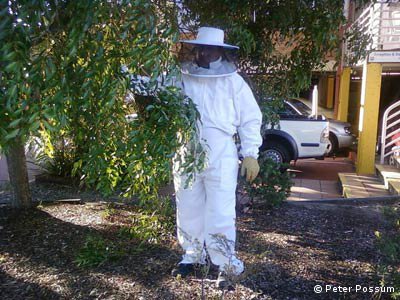
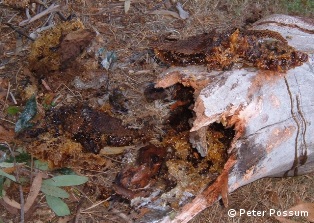
We can remove bees in Brisbane when they are living in the walls of your house or tree in your garden. We also do bee removal from commercial premises.
Our servicemen are experienced in bee removal and provide a 3 month free service period to ensure your bee problem has been solved. See our bee removal FAQ’s.
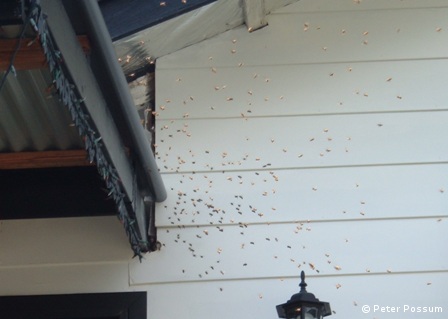
When a bee swarm is outside or just in a bush they may move on within a few hours, if not we can remove those swarms as well. Check out our bee media articles.
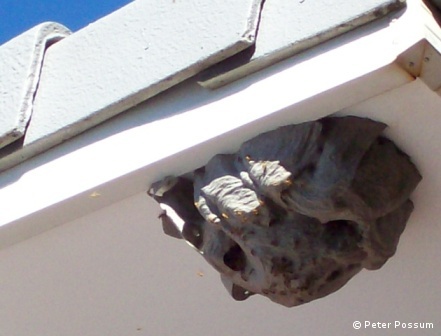
Our Brisbane wasp removal service includes eradicating the Wasps and also removing their nests. Our wasp removals also come with a 3 month free service period.
For help to remove Brisbane bees give our office a call or fill out our form.
Complete our form for help with Bee Pest Control
Why Bees & Warm Weather Go Together
Along with the chorus of lawnmowers, nothing sounds more like Spring than the buzzing of bees. There are over 1500 native species of bees in Australia, along with the introduced European honeybee.
Generally bees happily go about their business collecting nectar and water droplets to make honey, but in spring, bees can become a challenge if they decide to move house. When a Queen and a portion of her colony decide that their current accommodation is too crowded or is diseased, they leave to form a new hive. Hives only tend to become overcrowded in spring when there is a rapid increase in the number of bees in the hive that coincides with the increase in nectar gathered from spring flowers.
The new queen leaves with some of the workers and they have to find a new home. They send off “scouts” to look for a good place and the remainder of the bees form a large ball of living insects with the queen in the middle. They wait for a few hours while the “scouts” go looking.